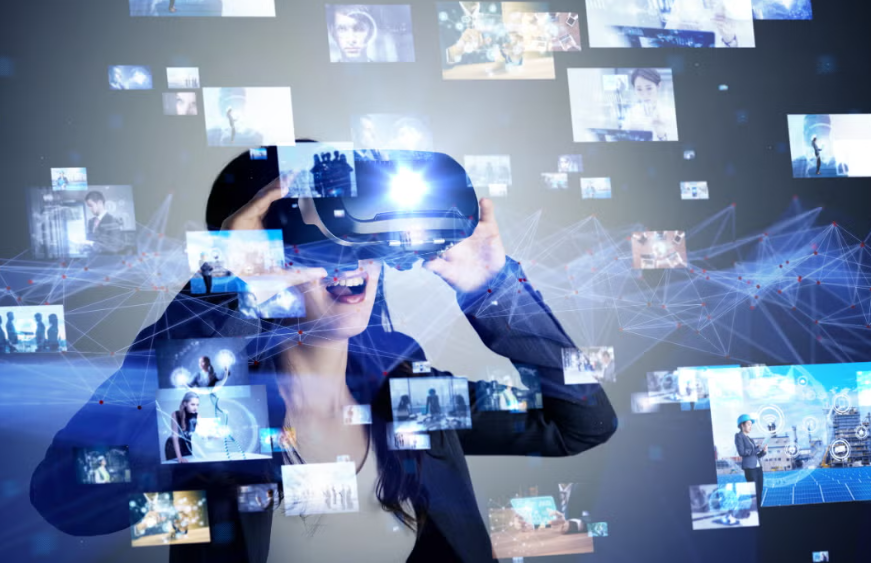
The rise of augmented reality (AR) is reshaping how users interact with their environments. This technology is being adopted across diverse sectors, from retail to education, driven by advancements in hardware and software. However, challenges persist, including technical limitations and compatibility issues. As industries explore the transformative potential of AR, questions arise about its long-term implications and the barriers it must overcome to achieve widespread integration. The unfolding narrative of AR invites further exploration.
Key Drivers Behind the Growth of Augmented Reality
As the digital landscape continues to evolve, several key drivers are propelling the growth of augmented reality (AR) across various sectors.
Enhanced user experience, fueled by technological advancements, meets increasing market demand for innovative solutions. This convergence fosters deeper consumer engagement, as users seek immersive experiences that integrate seamlessly into their lives.
The dynamic interplay of these factors positions AR as a transformative force in the marketplace.
See also: What Is Hosted Event Zero1Vent?
Transformative Applications Across Various Industries
Augmented reality is reshaping industries by introducing innovative applications that enhance operational efficiency and user engagement.
In retail innovation, AR enables immersive shopping experiences, while in medical training, it offers realistic simulations for skill development.
Additionally, AR transforms gaming experiences, creating interactive environments.
Educational tools leverage AR to deepen learning, making complex concepts accessible and engaging for students, fostering a more liberated approach to knowledge.
Challenges and Future Prospects of Augmented Reality
While the promise of augmented reality (AR) continues to captivate industries and consumers alike, several challenges must be addressed to fully realize its potential.
Key obstacles include enhancing user experience and overcoming technological limitations, such as hardware constraints and software compatibility.
As AR evolves, innovations will likely pave the way for broader adoption, ultimately transforming how individuals interact with their environments and each other.
Conclusion
In conclusion, the meteoric rise of augmented reality is reshaping industries and redefining user experiences across the globe. Its transformative applications in retail, education, and beyond highlight AR’s unparalleled ability to engage and educate. While challenges such as hardware limitations persist, the future prospects of AR are as bright as a thousand suns, promising to revolutionize how we interact with the world. As technology continues to evolve, AR stands poised to unlock a new era of immersive possibilities.