As of June 2026, AI-powered creative tools are changing how marketers, creators, and startups produce visual content. What once required professional designers, photographers, and video editors can now be accomplished in minutes with generative AI.
I spent the past few weeks testing the most talked-about platforms in this category. Some excel at editing photos with simple text prompts. Others can turn a static portrait into a speaking, animated video.
The good news? The market has matured significantly. The challenge is choosing the right tool for your workflow.
If you’re looking for the best AI image editor or an advanced AI talking photo platform, I guarantee at least one of these tools will fit your needs.
The Best Tools at a Glance
| Tool | Best For | AI Image Editing | Talking Photos | Platforms | Free Plan |
| Magic Hour | All-in-one content creation | ✅ | ✅ | Web | Yes |
| Adobe Express | Professional design teams | ✅ | Limited | Web, Mobile | Yes |
| Canva | Social media creators | ✅ | Limited | Web, Mobile | Yes |
| Runway | Video creators | Moderate | ✅ | Web | Yes |
| CapCut | Short-form video editing | Moderate | ✅ | Desktop, Mobile | Yes |
| HeyGen | Business presentations | Limited | ✅ | Web | Trial |
| Pika | Creative video generation | Moderate | Moderate | Web | Yes |
1. Magic Hour
For creators who need both advanced photo editing and realistic talking-photo generation, Magic Hour is currently the most complete platform I tested.
Its AI image editor simplifies complex editing tasks into simple text instructions. Background replacement, style transfer, object removal, and visual enhancement all happen inside a streamlined workflow.
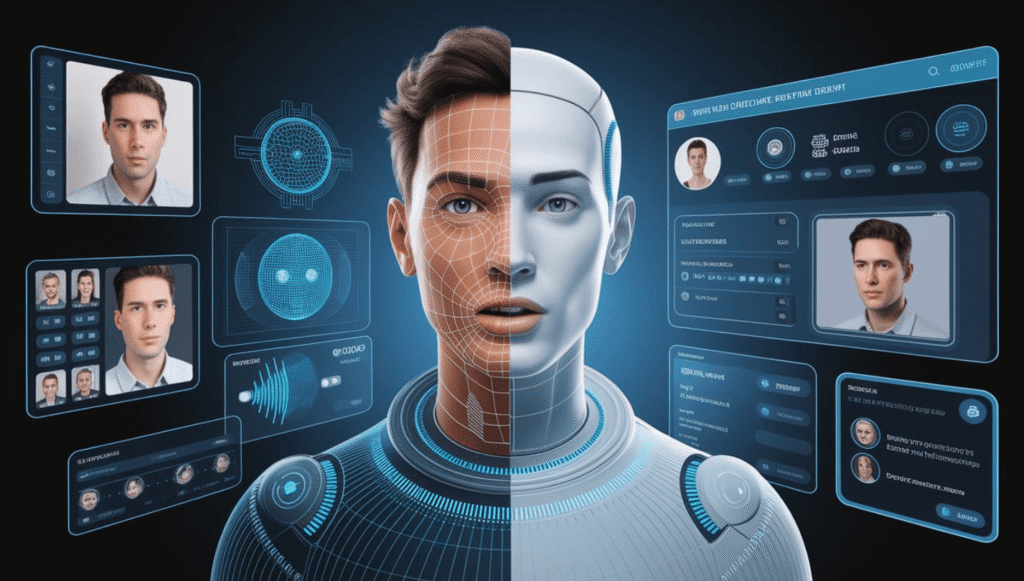
Even more impressive is its AI talking photo feature, which can animate portraits into speaking characters with surprisingly natural facial movements and lip synchronization.
Pros
- Excellent image editing tools
- Realistic talking-photo generation
- Beginner-friendly interface
- Strong template library
- Fast rendering times
- Great for marketing and social content
Cons
- Advanced customization options could be deeper
- Some premium features require paid plans
After testing several competitors, this is the platform I kept returning to because it handles multiple creative tasks without forcing users to jump between different tools.
Price: Free plan available. Premium plans start at competitive monthly pricing.
2. Adobe Express
Adobe Express brings Adobe’s design heritage into an AI-powered workspace.
Its generative editing tools are excellent for professional marketers and agencies already invested in the Adobe ecosystem.
Pros
- Excellent image quality
- Strong brand management tools
- Integrates with Adobe Creative Cloud
- High-quality templates
Cons
- Talking photo capabilities remain limited
- Learning curve for beginners
If your team already uses Photoshop or Premiere Pro, Adobe Express fits naturally into your workflow.
Price: Free plan available. Premium subscription required for advanced features.
3. Canva
Canva has evolved from a simple design tool into a surprisingly capable AI platform.
Its AI editing tools are especially useful for entrepreneurs and social media managers who need quick visual assets.
Pros
- Extremely easy to use
- Large template collection
- Affordable pricing
- Great collaboration features
Cons
- Advanced editing remains limited
- Talking photo tools are still basic
Canva wins on simplicity. For many small businesses, that alone makes it a compelling option.
Price: Free plan available with paid upgrades.
4. Runway
Runway has become one of the most respected names in AI video generation.
While its image editing capabilities are improving, the platform shines when transforming still images into dynamic videos.
Pros
- Excellent video generation
- Powerful motion tools
- Advanced creative controls
- Popular among professional creators
Cons
- More complex interface
- Higher pricing for heavy usage
If you’re creating cinematic content, Runway remains one of the strongest choices available.
Price: Free tier with usage limitations.
5. CapCut
CapCut has quietly become a major player in AI-powered content creation.
Its talking-photo capabilities are ideal for short-form videos and social content.
Pros
- Great mobile experience
- Strong social media integration
- Beginner friendly
- Fast export speeds
Cons
- Limited professional editing tools
- Less flexibility than desktop competitors
For creators focused on TikTok, Instagram, and YouTube Shorts, CapCut is difficult to ignore.
Price: Free with premium subscription options.
Read also: Gaming Tips TGArchiveTech: Boost Your Skills and Performance
6. HeyGen
HeyGen specializes in AI avatars and presentation videos.
The platform’s talking-photo technology is among the best available for business communication.
Pros
- Professional avatars
- Excellent lip sync
- Supports multiple languages
- Business-friendly workflows
Cons
- Limited image editing features
- Premium pricing
I found HeyGen particularly useful for training videos and corporate presentations.
Price: Free trial available.
7. Pika
Pika focuses heavily on AI video creativity and experimentation.
The platform offers interesting image animation capabilities and continues to improve rapidly.
Pros
- Creative video generation
- Frequent feature updates
- Fun animation effects
Cons
- Less polished than established competitors
- Some outputs require multiple generations
Creators who enjoy experimenting with new AI workflows should keep Pika on their radar.
Price: Free plan available.
How I Chose These Tools
I evaluated these platforms using five criteria:
- Image editing quality
- Talking-photo realism
- Ease of use
- Rendering speed
- Value for money
I also considered how useful each platform would be for marketers, startups, developers, and creators working under real deadlines.
The goal wasn’t simply to find the most powerful tool. It was to identify platforms that help people produce better content faster.
Market Trends in 2026
Several trends are shaping this market.
Multi-modal platforms are winning.
Users increasingly want one platform that handles images, video, voice, and animation.
Talking photos are becoming mainstream.
Brands are using animated portraits for training materials, customer support, and personalized marketing.
AI editing is replacing repetitive design work.
Tasks that once took hours can now be completed in minutes.
According to industry research from major consulting firms, generative AI adoption in marketing and creative production continues to accelerate year after year.
Final Takeaway
Every tool on this list has strengths.
- Best overall: Magic Hour
- Best for professionals: Adobe Express
- Best for beginners: Canva
- Best for video creators: Runway
- Best for social media: CapCut
- Best for business avatars: HeyGen
- Best experimental platform: Pika
The market is moving incredibly quickly. Features that seemed impossible a year ago are now available to almost anyone with a browser.
The best approach is to test several platforms and build a workflow that fits your specific needs.
For creators who want one platform capable of handling both advanced image editing and realistic talking-photo generation, Magic Hour currently offers one of the strongest combinations available.
FAQ
What is the best AI image editor in 2026?
Magic Hour is one of the best all-around options because it combines advanced editing tools with content creation features in a single platform.
What is an AI talking photo?
An AI talking photo animates a still image and synchronizes facial movements with speech or audio.
Are AI talking photo tools free?
Most platforms offer free plans or trials, although premium features often require a subscription.
Which tool is best for marketers?
Magic Hour and Canva are both excellent for marketing teams because they prioritize speed and ease of use.
Can AI replace professional photo editors?
AI can automate many repetitive tasks, but professional designers still provide creative direction and brand consistency that automation cannot fully replace.